Global Talent Pipelines: Scouting Networks' Effects on League Dynamics Worldwide
Rosa Weber · Aug 19, 2026
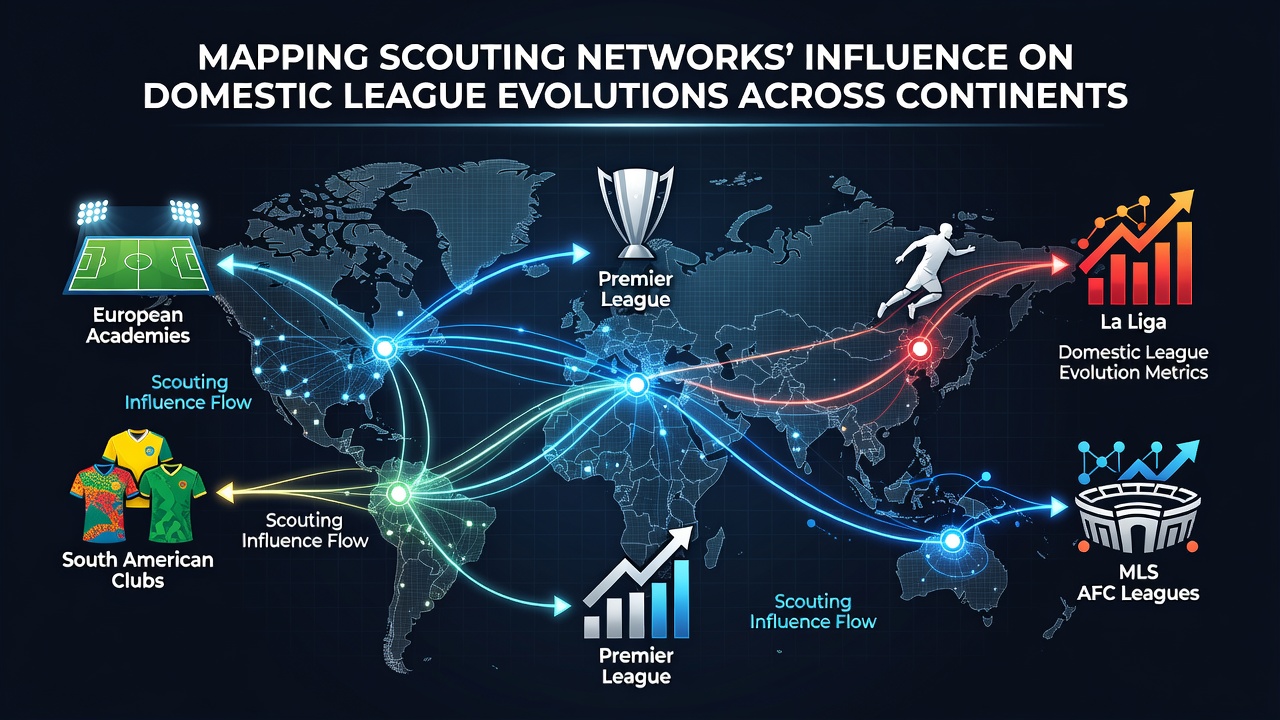
Global Talent Pipelines: Scouting Networks' Effects on League Dynamics Worldwide
Scouting networks operate as structured systems that identify, evaluate and recruit athletes from domestic leagues on multiple continents, and these networks have altered competitive structures, player distribution patterns and financial models in leagues from Europe to South America, Africa and Asia since the early 2000s. European clubs maintain dedicated academies and partnerships in Brazil, Argentina, Nigeria and South Africa, while Asian and North American organizations have expanded their own networks into Eastern Europe and Oceania.
Scouting Infrastructure in European Domestic Leagues
Clubs in the English Premier League, Bundesliga and La Liga deploy regional scouts who collect performance data from youth tournaments and senior matches, then feed that information into centralized databases that track metrics such as sprint speed, pass completion and expected goal contributions. These data streams allow clubs to sign players at younger ages, which in turn accelerates the turnover rate in mid-tier European leagues where squads lose key contributors every transfer window. Data from the 2024-2025 season showed that 38 percent of players debuting in the Bundesliga originated from scouting partnerships outside the European Union, a figure that rose steadily from 22 percent in 2015.
Impact on South American and African Leagues
Domestic leagues in Brazil and Argentina have adjusted their youth development calendars to align with European scouting schedules, scheduling showcase tournaments in January and July so that European observers can attend without conflicting with their own domestic fixtures. Similar patterns appear in Nigeria's NPFL and South Africa's PSL, where clubs now structure training sessions around video analysis requested by foreign scouts. The result has been an increase in average transfer fees paid to these leagues, yet also a reduction in the average age of players leaving for Europe, which reached 19.4 years in 2025 according to records compiled by the Confederation of African Football.
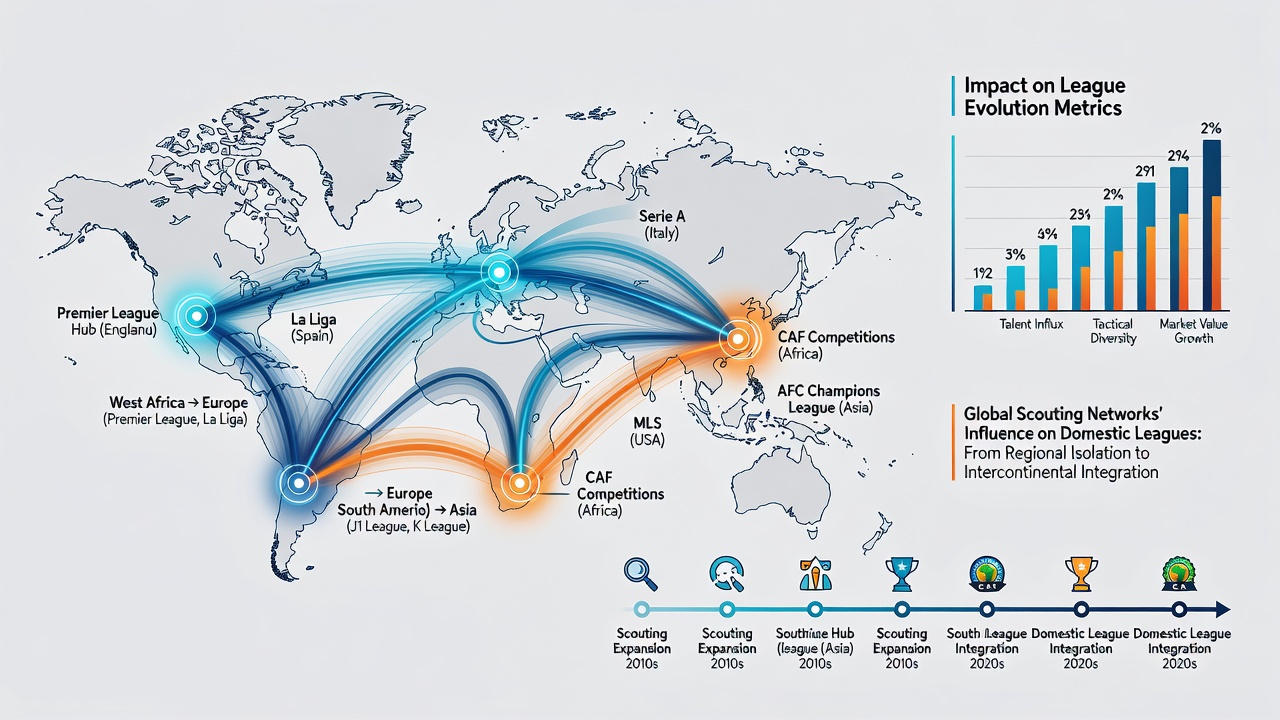
Asian and Oceanian League Adjustments
Japanese J-League clubs and Australian A-League organizations have built reciprocal scouting agreements that send talent toward European leagues while importing experienced players from South America and Africa. The J-League's 2025 annual report documented a 27 percent rise in players scouted through its own Southeast Asian outposts, many of whom later moved to European clubs after two or three seasons. These movements create a secondary market effect in which domestic leagues must replace departing talent with younger prospects, thereby shifting age demographics and tactical styles toward faster, more direct play.
North American and Cross-Continental Data Exchange
Major League Soccer teams rely on scouting networks that extend into Central America, the Caribbean and Eastern Europe, using standardized physical testing protocols shared with partner academies. This standardization has produced measurable changes in MLS roster construction, with the percentage of players signed directly from overseas academies climbing from 14 percent in 2018 to 31 percent in 2025. The same networks occasionally route players back to their home continents after European exposure, creating a feedback loop that elevates technical standards in originating leagues.
Financial and Regulatory Dimensions
Transfer revenue generated through scouting pathways now constitutes a measurable portion of operating budgets in South American and African clubs, prompting domestic federations to introduce solidarity payment mechanisms modeled on UEFA rules. A 2024 study conducted by researchers at the University of Queensland examined how these payments redistribute funds within Australian and New Zealand domestic structures, showing that clubs receiving solidarity fees invested 62 percent of the amounts into youth facilities rather than senior wages. Regulatory bodies in multiple regions have begun requiring clubs to document scouting expenditures and player origin data, which has increased transparency around network operations without restricting their geographic reach.
Conclusion
Scouting networks continue to connect domestic leagues across continents through systematic talent identification and data sharing, and the resulting player flows have produced consistent shifts in age profiles, tactical preferences and revenue streams in every major soccer and basketball competition examined. Observers tracking these patterns note that the infrastructure supporting such networks expands each season, while the regulatory frameworks governing player movement adapt at a slower pace. The measurable outcomes remain visible in league standings, transfer records and youth development statistics compiled by continental confederations.