Cross-Border Athlete Mobility and Its Influence on Worldwide League Dynamics
Jonas Braun · Oct 1, 2026
Cross-Border Athlete Mobility and Its Influence on Worldwide League Dynamics
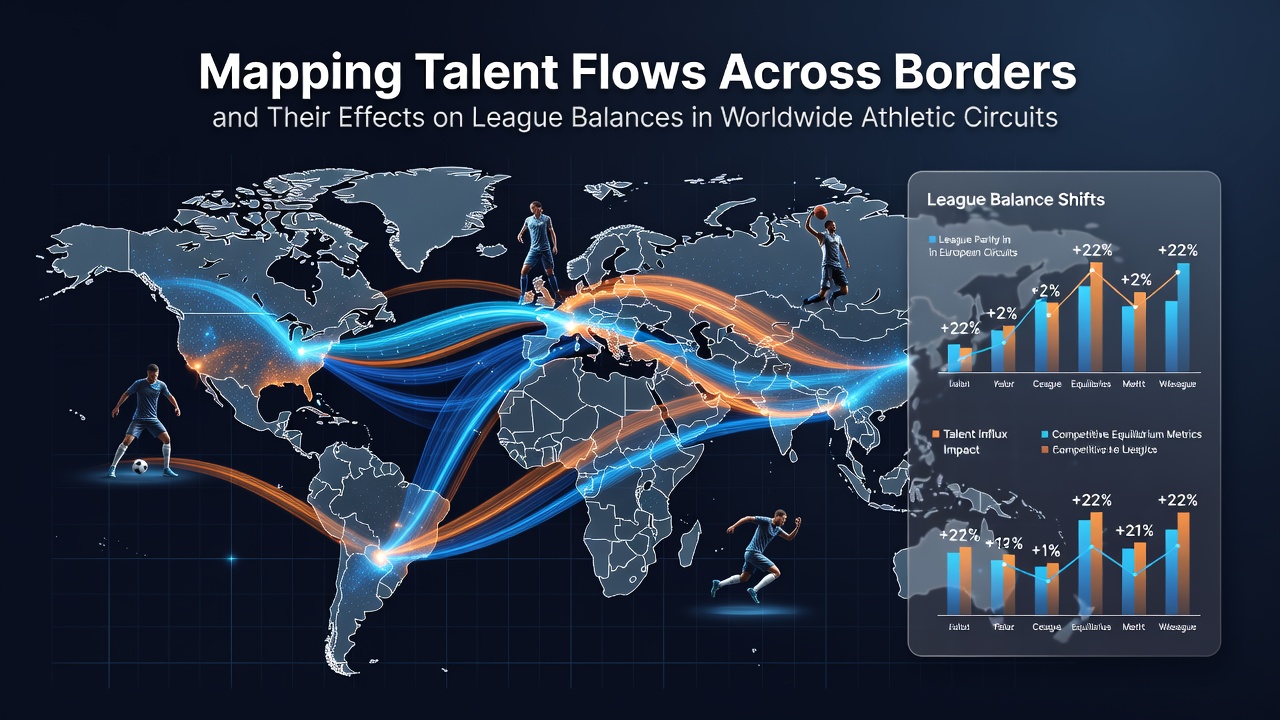
Researchers tracking athlete movements across continents have documented steady increases in cross-border transfers since the early 2000s, with data from multiple federations showing how these patterns alter competitive structures in leagues from Europe to South America and beyond. Observers note that soccer, basketball, and ice hockey demonstrate particularly pronounced flows, where players from developing markets frequently relocate to established circuits in wealthier nations, reshaping roster compositions and performance metrics in the process.
Documented Migration Patterns Across Major Sports
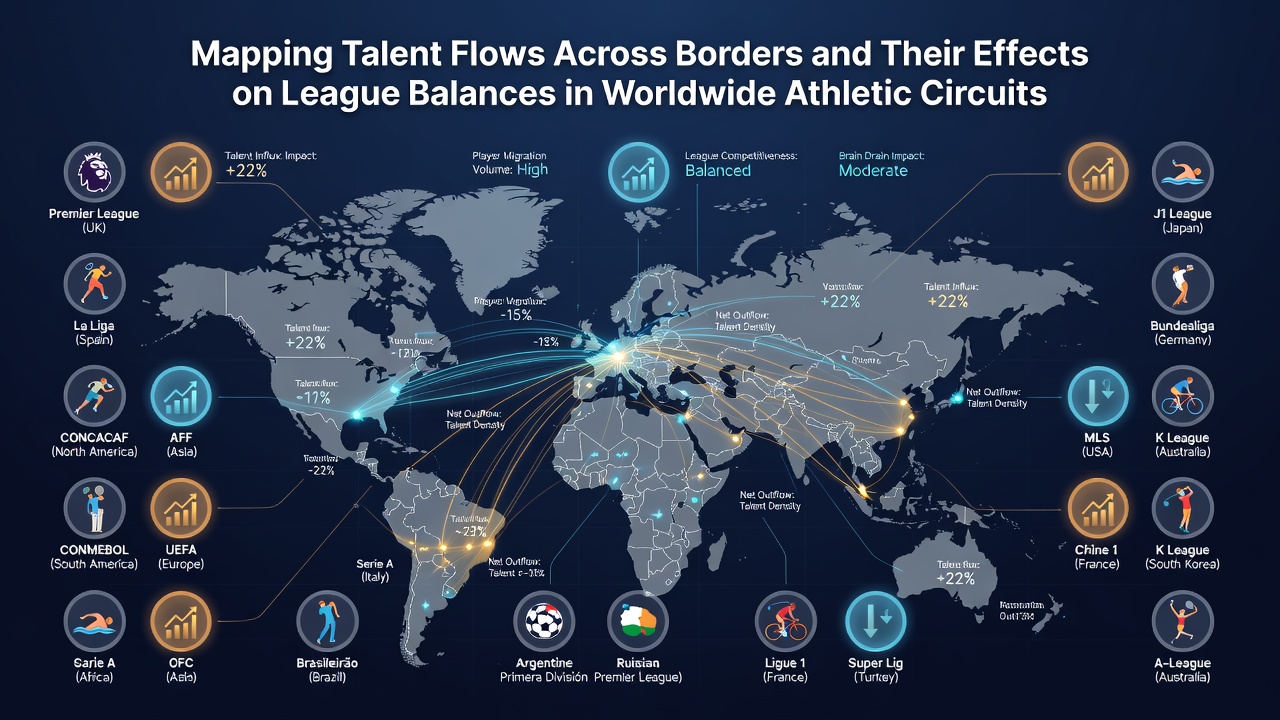
Figures from international governing bodies reveal that European soccer leagues absorbed over 60 percent of South American and African talent exports between 2015 and 2025, according to aggregated transfer records maintained by confederations. In October 2026, additional statistics compiled by regional sports agencies indicated continued acceleration in these movements during summer windows, particularly into the English Premier League and German Bundesliga, where academies and scouting networks actively target emerging markets. Those who analyze these datasets point out that similar trends appear in basketball, where the NBA has drawn increasing numbers of prospects from Spain, France, and Australia, while domestic leagues in those countries experience corresponding outflows that affect their internal standings.
Studies conducted by academic institutions in Canada and Australia demonstrate how visa policies and labor agreements facilitate or restrict these movements, with Canadian researchers highlighting the role of North American hockey leagues in pulling talent from Sweden and Finland. Data indicates that such outflows correlate with shifts in domestic league competitiveness, as younger players depart earlier and established squads lose continuity. Experts tracking these exchanges emphasize that economic incentives, including salary differentials and endorsement opportunities, drive the majority of decisions, although regulatory frameworks in the European Union and Mercosur regions impose additional layers of oversight on contract negotiations and age restrictions.
Effects on League Balance and Performance Metrics
Performance data collected across multiple seasons shows measurable impacts on team standings when talent departs one circuit for another. Leagues that lose high-volume players often register declines in goal-scoring averages or win percentages, whereas recipient leagues experience corresponding gains in depth and tactical variety. One analysis of Premier League results between 2018 and 2024, for instance, linked the arrival of South American midfielders to improved passing efficiency metrics, which in turn influenced title races and European qualification spots. Observers have noted parallel developments in rugby union, where Pacific Island players moving to northern hemisphere clubs have altered scrum and backline statistics in both source and destination competitions.
Research published by European sports policy groups further illustrates how these flows interact with financial regulations such as salary caps and solidarity mechanisms, which attempt to redistribute resources back to developing federations. In basketball, similar redistribution efforts appear through NBA draft rules that grant compensation to foreign clubs, though enforcement varies by jurisdiction. Those examining long-term trends find that leagues maintaining strong youth development pipelines, such as the Dutch Eredivisie or Brazilian Serie A, sometimes regain equilibrium through subsequent waves of homegrown replacements, even as initial departures create temporary imbalances.
Regional Variations and Regulatory Responses
Regional differences emerge clearly in the data, with Asian leagues experiencing net inflows from Europe and South America in recent years, while African circuits continue to register net outflows. Australian researchers have documented how their domestic soccer and basketball competitions adjust through targeted recruitment from Southeast Asia and the Pacific, creating distinct balance patterns compared to European models. Regulatory bodies in the European Union have introduced monitoring frameworks that require clubs to report transfer volumes and youth investment levels, aiming to mitigate excessive concentration of talent in a handful of wealthy organizations. Comparable initiatives appear in South American confederations, where data-sharing agreements seek to track player pathways and ensure compensation reaches originating clubs.
Additional case studies from ice hockey demonstrate how North American leagues interact with Scandinavian and Russian circuits, where player movement affects playoff qualification rates and revenue distributions. Figures reveal that clubs losing star players often invest more heavily in scouting and academies to compensate, which can stabilize standings over multiple seasons even if short-term disruptions occur.
Conclusion
Comprehensive mapping of these talent movements relies on coordinated data from federations, academic centers, and regulatory agencies across continents, producing clearer pictures of how individual transfers accumulate into structural shifts. Continued monitoring through 2026 and beyond will likely refine understanding of the mechanisms that maintain or disrupt competitive equilibrium in global athletic circuits, particularly as new economic and policy variables enter the equation.